

Pte. Daniel Perry Sampson: No. 2 Construction Battalion Veteran and Halifax’s Last Execution
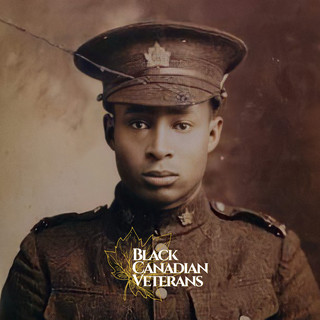

Daniel Perry Sampson was a Black Canadian born in Windsor, Nova Scotia, in January 1896. In August 1916 he enlisted in No. 2 Construction Battalion, listing his mother, Elizabeth, as next of kin.
Sampson served overseas with the battalion in France and returned to Canada in early 1919. After the war he settled in Halifax, where he struggled to find steady work and faced ongoing racial discrimination.
In 1924 he married Rita-Mae Medley. The couple later had a son named Arthur. During the Great Depression, Sampson worked hard to support his family under difficult circumstances.
In the summer of 1933, tragedy struck when Edward and Bramwell Heffernan, two young white brothers, were found dead near railway tracks outside Halifax. Their deaths shocked the community. Under pressure to identify a suspect, police arrested Sampson and charged him with murder.
The case rested heavily on a signed confession. However, Sampson was known to sign his name in full, yet the confession was marked only with an “X.” This raised serious questions about whether the confession was genuine or coerced. Despite public appeals for mercy—including from the boys’ own father—Sampson was convicted and sentenced to death. On 7 March 1935 he was hanged behind the Halifax courthouse, becoming the last person executed in the city.
Today Sampson’s case is being re-examined. George Elliott Clarke, a celebrated Canadian poet and scholar, has led efforts to have Sampson posthumously exonerated. Clarke argues that the trial was shaped by systemic racism and that clearing Sampson’s name is an act of historical justice. As Clarke has stated:
“This is a case that cries out for exoneration. It’s a case that cries out for justice.”
Recent reporting by CTV News, CBC, and the Halifax Examiner has highlighted lingering questions about the conviction and execution. Many historians and legal observers believe the evidence was weak and the confession unreliable. These accounts underscore how racial bias and public pressure may have influenced the outcome.
Daniel Perry Sampson is remembered both for his military service and as a symbol of injustice. His story invites reflection on how racism has shaped Canadian history and why it remains important to remember those who were wronged.
Daniel Perry Sampson était un Canadien noir né à Windsor, en Nouvelle-Écosse, en janvier 1896. En août 1916, il s’enrôla dans le 2ᵉ Bataillon de construction et désigna sa mère, Elizabeth, comme plus proche parente.
Sampson servit outre-mer avec le bataillon en France et rentra au Canada au début de 1919. Après la guerre, il s’établit à Halifax, où il éprouva de grandes difficultés à trouver du travail et fut confronté à une discrimination raciale persistante.
En 1924, il épousa Rita-Mae Medley. Le couple eut un fils prénommé Arthur. Durant la Grande Dépression, Sampson travailla durement pour subvenir aux besoins de sa famille.
À l’été 1933, une tragédie survint lorsque les corps d’Edward et de Bramwell Heffernan, deux jeunes frères blancs, furent retrouvés près d’une voie ferrée à l’extérieur de Halifax. Leur mort bouleversa la communauté. Sous la pression de trouver un responsable, la police arrêta Sampson et l’accusa de meurtre.
L’accusation reposait en grande partie sur des aveux prétendument signés. Toutefois, Sampson avait l’habitude de signer son nom au complet, alors que le document ne portait qu’un simple « X ». Cette anomalie souleva de sérieux doutes quant à l’authenticité des aveux et à la possibilité qu’ils aient été obtenus sous la contrainte. Malgré les appels publics à la clémence, notamment de la part du père des deux garçons, Sampson fut reconnu coupable et condamné à mort. Le 7 mars 1935, il fut pendu derrière le palais de justice de Halifax, devenant ainsi la dernière personne exécutée dans cette ville.
Aujourd’hui, l’affaire Sampson fait l’objet d’un nouvel examen. George Elliott Clarke, poète et universitaire canadien de renom, mène des démarches en vue d’obtenir son exonération à titre posthume. Clarke soutient que le procès fut marqué par le racisme systémique et que la réhabilitation de Sampson constitue un geste essentiel de justice historique. Comme il l’a déclaré :
« C’est une affaire qui réclame une exonération. C’est une affaire qui réclame justice. »
Des articles récents de CTV News, de CBC et du Halifax Examiner mettent en lumière les nombreuses questions qui subsistent concernant la condamnation et l’exécution de Sampson. Plusieurs historiens et juristes estiment que les preuves présentées étaient faibles et que les aveux étaient peu fiables. Ces sources soulignent également à quel point les préjugés raciaux et la pression populaire ont pu influencer l’issue du procès.
Daniel Perry Sampson demeure dans les mémoires non seulement pour son service militaire, mais aussi comme un symbole de l’injustice. Son histoire invite à réfléchir à l’influence du racisme sur l’histoire canadienne et à l’importance de préserver la mémoire de celles et ceux qui ont été victimes d’injustices.
Gravestone of Pte. Daniel Perry Sampson. Mugshot of Daniel Perry Sampson, 1933. Mugshot of Daniel Perry Sampson, 1933. 1933 newspaper report of Sampson being charged with double murder. 1924 newspaper wedding announcement for Sampson-Medley. Attestation paper of Pte. Daniel Perry Sampson, 7 August 1916. Marriage register for Daniel Perry Sampson and Rita Medley, 11 November 1924. Discharge certificate of Pte. Daniel Sampson, March 1919. Proceedings on discharge for Pte. Daniel Sampson, 1919. Proceedings on discharge for Pte. Daniel Sampson, 1919. Proceedings on discharge for Pte. Daniel Sampson, 1919. Article about David Steeves’ research on the 1933 case. Portrait of Carolyn, granddaughter of Daniel Perry Sampson.


Comments