

Pte. Columbus Bowen: From Oklahoma to No. 2 Construction Battalion
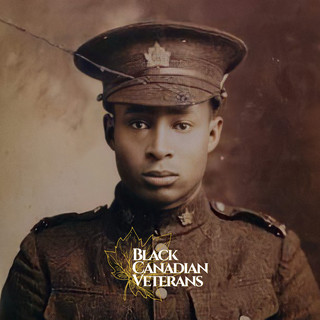

Pte. Columbus Bowen
Columbus Bowen was born on 30 May 1895 in Oklahoma and carried regimental number 931559. His life crossed borders, battalions, and generations. He left the Jim Crow South for the Black Prairie settlements of Paxton and Amber Valley, Alberta, and later served with No. 2 Construction Battalion—the largest Black unit in Canadian military history.
Bowen arrived in Alberta as part of the early wave of African American homesteaders seeking land, autonomy, and safety. In 1916 he volunteered for military service and was placed in No. 2 Construction Battalion. In March 1917 he left Halifax, arrived in England in April, and continued to France in May. There, in the Jura Mountains, he joined the Canadian Forestry Corps.
His work was essential to the Allied war effort: cutting timber, operating sawmills, hauling logs, and building a logging railway that moved lumber to the front. Timber reinforced trenches, supported artillery positions, and fuelled the machinery of war. Bowen’s labour formed part of the hidden infrastructure that sustained Allied operations in 1917 and 1918.
After returning home, Bowen married Emma in 1921. In 1922 they welcomed their son Jesse. The family lived in Paxton and Amber Valley—communities built through hard work, mutual support, and the determination to create a future free from the constraints they had left behind in the United States.
Bowen died in 1936, but his legacy continued through Jesse, who enlisted during the Second World War. Serving overseas, Jesse carried forward the family’s tradition of quiet service. He was killed in a motorcycle accident in the spring of 1945, only months before the war’s end.
Together, the lives of Columbus and Jesse Bowen connect the forests of France, the homesteads of northern Alberta, and the service of two generations. Their story stands as a testament to resilience, responsibility, and the pursuit of dignity.
Le soldat Columbus Bowen
Columbus Bowen est né le 30 mai 1895 en Oklahoma et portait le matricule 931559. Sa vie traversa les frontières, les bataillons et les générations. Il quitta le sud des États-Unis, marqué par les lois de Jim Crow, pour s’établir dans les communautés agricoles noires de Paxton et d’Amber Valley, en Alberta, avant de servir dans le 2ᵉ Bataillon de construction, la plus importante unité noire de l’histoire militaire canadienne.
Bowen arriva en Alberta avec l’une des premières vagues de colons afro-américains à la recherche de terres, d’autonomie et de sécurité. En 1916, il se porta volontaire et fut affecté au 2ᵉ Bataillon de construction. En mars 1917, il quitta Halifax, débarqua en Angleterre en avril et poursuivit vers la France en mai. Dans le massif du Jura, il entreprit les travaux exigeants du Corps forestier canadien.
Ses fonctions étaient essentielles à l’effort de guerre allié : abattre des arbres, faire fonctionner les scieries, transporter les billes de bois et construire une voie ferrée forestière pour acheminer le bois vers le front. Le bois servait à renforcer les tranchées, à soutenir les positions d’artillerie et à alimenter les machines de guerre. Le travail de Bowen faisait partie de cette infrastructure méconnue qui soutint les opérations alliées en 1917 et 1918.
Après son retour au Canada, Bowen épousa Emma en 1921. En 1922, le couple accueillit son fils Jesse. La famille vécut à Paxton et à Amber Valley, communautés fondées par le travail acharné, l’entraide et la détermination de bâtir un avenir libéré des contraintes qu’ils avaient fuies aux États-Unis.
Bowen mourut en 1936, mais son héritage se poursuivit grâce à Jesse, qui s’enrôla pendant la Seconde Guerre mondiale. En servant outre-mer, Jesse continua la tradition familiale de service discret. Il perdit la vie dans un accident de motocyclette au printemps 1945, quelques mois seulement avant la fin de la guerre.
Ensemble, les parcours de Columbus et de Jesse Bowen relient les forêts de France, les terres agricoles du nord de l’Alberta et le service de deux générations. Leur histoire témoigne de la résilience, du sens du devoir et de la quête de dignité.
Studio portrait of Pte. Columbus Bowen in uniform. Studio portrait of Columbus Bowen and Robert Jamerson in uniform. Columbus Bowen with family and son Jesse, late 1920s. 1945 newspaper report of Pte. Jesse Bowen killed in action. Second 1945 newspaper clipping on the death of Pte. Jesse Bowen. Return-to-Canada form for Pte. Robert Jamerson, January 1919. Funeral notice for Columbus Bowen Jr., July 1936. Medical examination form for Pte. Columbus Bowen on discharge. Discharge certificate of Pte. Columbus Bowen, February 1919. Estate form for Pte. Jesse Lenard Bowen, April 1945. Attestation paper of Pte. Robert Jamerson, 21 September 1916. Attestation paper of Pte. Jesse Lenard Bowen, February 1942.


Comments