

Cpl. Henry Francis Courtney: Eager Volunteer of No. 2 Construction Battalion
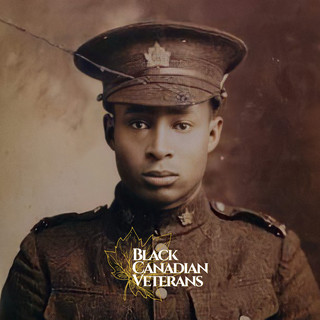

Henry Francis Courtney was born on 7 November 1886 in Owen Sound, Ontario. He joined No. 2 Construction Battalion within seven weeks of its formal authorization.
At the time of his enlistment, Henry was living in Guelph with his sister Esther and her husband, John Carter. Like many Black men, he had tried several times to enlist before finally being accepted.
In January 1916, J. R. B. Whitney, publisher and editor of the Canadian Observer, reported that plans had been approved to raise a company of coloured soldiers. The paper published a cut-out form for volunteers to return to Whitney. In response, Henry wrote to him:
“If you can please find the time to sit down and write a few lines to let me know if I can join, I will be deeply in love with you.”
Henry had already submitted his name to the Observer. In his letter he also included photographs of his older brother Jacob, who was then training with the 157th Battalion in Collingwood. Jacob was one of an estimated 500 Black Canadians serving in units alongside white volunteers. Whitney published Henry’s letter under the headline: “H.F. Courtney Loyal to his Country. Brother Training. Wants to do his bit.”
Henry finally enlisted in Toronto on 30 August 1916. Before the battalion left Halifax for Liverpool in March 1917, he was promoted from private to corporal. He arrived in Liverpool in April 1917.
The unit was then stationed in Seaford, England, where, according to the war diary, “military training was subordinated to agricultural labor, mostly planting potatoes.” On 17 May 1917, No. 2 Construction Battalion left Seaford for Boulogne, France, and spent the night at St. Martin’s Rest Camp. The next day the men were issued iron rations and steel helmets and entrained for La Joux in the Jura Mountains, arriving on the morning of 20 May.
During the train journey across France the men were fed only once. Many, including Henry, ate their iron rations. On 21 May, 78 soldiers—including Corporal Henry Francis Courtney—were ordered to forfeit five days’ pay for “making away with iron rations.”
Both Courtney brothers survived the war. Henry Francis Courtney died on 3 October 1947 and is buried in Greenwood Cemetery.
Le caporal Henry Francis Courtney
Henry Francis Courtney est né le 7 novembre 1886 à Owen Sound, en Ontario. Il s’enrôla dans le 2ᵉ Bataillon de construction moins de sept semaines après son autorisation officielle.
Au moment de son enrôlement, Henry habitait à Guelph avec sa sœur Esther et son beau-frère, John Carter. Comme de nombreux hommes noirs, il avait tenté de s’enrôler à plusieurs reprises avant d’être finalement accepté.
En janvier 1916, J. R. B. Whitney, éditeur et rédacteur en chef du Canadian Observer, annonça que des plans avaient été approuvés pour former une compagnie de soldats noirs. Le journal publia un formulaire détachable que les volontaires pouvaient remplir et retourner à Whitney. En réponse, Henry lui écrivit :
« Si vous pouviez trouver le temps de vous asseoir et de m’écrire quelques lignes pour me faire savoir si je peux m’enrôler, je vous en serais profondément reconnaissant. »
Henry avait déjà soumis son nom au Canadian Observer. Dans sa lettre, il joignit également des photographies de son frère aîné, Jacob, qui suivait alors son entraînement avec le 157ᵉ Bataillon à Collingwood. Jacob faisait partie des quelque 500 Canadiens noirs qui servaient dans des unités aux côtés de volontaires blancs. Whitney publia la lettre de Henry sous le titre : « H. F. Courtney, fidèle à son pays. Son frère s’entraîne. Il veut lui aussi faire sa part. »
Henry s’enrôla finalement à Toronto le 30 août 1916. Avant que le bataillon quitte Halifax pour Liverpool en mars 1917, il fut promu de soldat à caporal. Il arriva à Liverpool en avril 1917.
L’unité fut ensuite stationnée à Seaford, en Angleterre, où, selon le journal de guerre, « l’entraînement militaire fut relégué au second plan au profit des travaux agricoles, principalement la plantation de pommes de terre ». Le 17 mai 1917, le 2ᵉ Bataillon de construction quitta Seaford pour Boulogne, en France, et passa la nuit au camp de repos de Saint-Martin. Le lendemain, les soldats reçurent des rations de réserve et des casques d’acier, puis montèrent dans le train à destination de La Joux, dans le massif du Jura, où ils arrivèrent le matin du 20 mai.
Durant le voyage en train à travers la France, les hommes ne reçurent qu’un seul repas. Plusieurs d’entre eux, dont Henry, consommèrent leurs rations de réserve. Le 21 mai, 78 soldats — dont le caporal Henry Francis Courtney — furent sanctionnés par une retenue de cinq jours de solde pour avoir « consommé leurs rations de réserve sans autorisation ».
Les deux frères Courtney survécurent à la guerre. Henry Francis Courtney s’éteignit le 3 octobre 1947. Il est inhumé au cimetière Greenwood.
Colourized studio portrait of Cpl. Henry Francis Courtney in uniform. Studio portrait of Cpl. Henry Francis Courtney in uniform. Gravestone of Pte. H. F. Courtney, No. 2 Construction Battalion. Canadian Observer article featuring Henry Courtney’s letter to the editor. Funeral notice for Henry Francis Courtney, October 1947. Funeral notice for Henry Francis Courtney, October 1947. Military form recording Henry Courtney’s return to Canada. Obituary for Henry F. Courtney, 4 October 1947. Cpl Courtney's return papers Discharge certificate of Cpl. Henry Francis Courtney, February 1919. Proceedings on discharge for Cpl. Henry Francis Courtney. Proceedings on discharge for Cpl. Henry Francis Courtney. Attestation paper of Cpl. Henry Francis Courtney, 30 August 1916. Attestation paper of Cpl. Henry Francis Courtney, 30 August 1916.


Comments